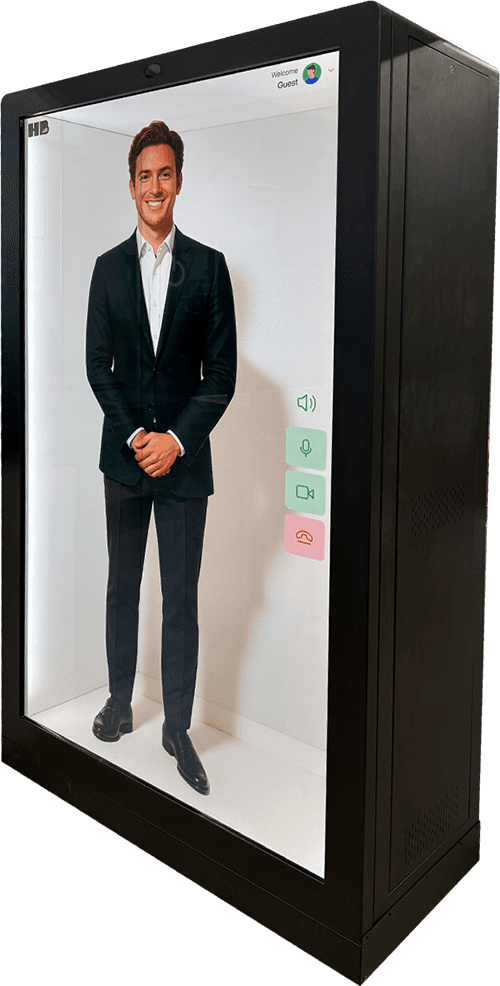
Multilingual Hotel Concierge: End the Language Barrier
You posted the job in March. You reposted it in May with a higher wage. It is now the third posting, and the desk is still empty.
So here you are at 11 PM, wondering what you are doing wrong.
Probably nothing.

Kiosk vs Chatbot vs Conversational AI Avatar: Full Guide
Every front line has already met automation twice. The first time it arrived as a kiosk. The second time it arrived as a chatbot. Both promised the same thing: serve more people with fewer staff. And both left the same scene behind: a customer tapping through menus, sighing, and looking around for a human.
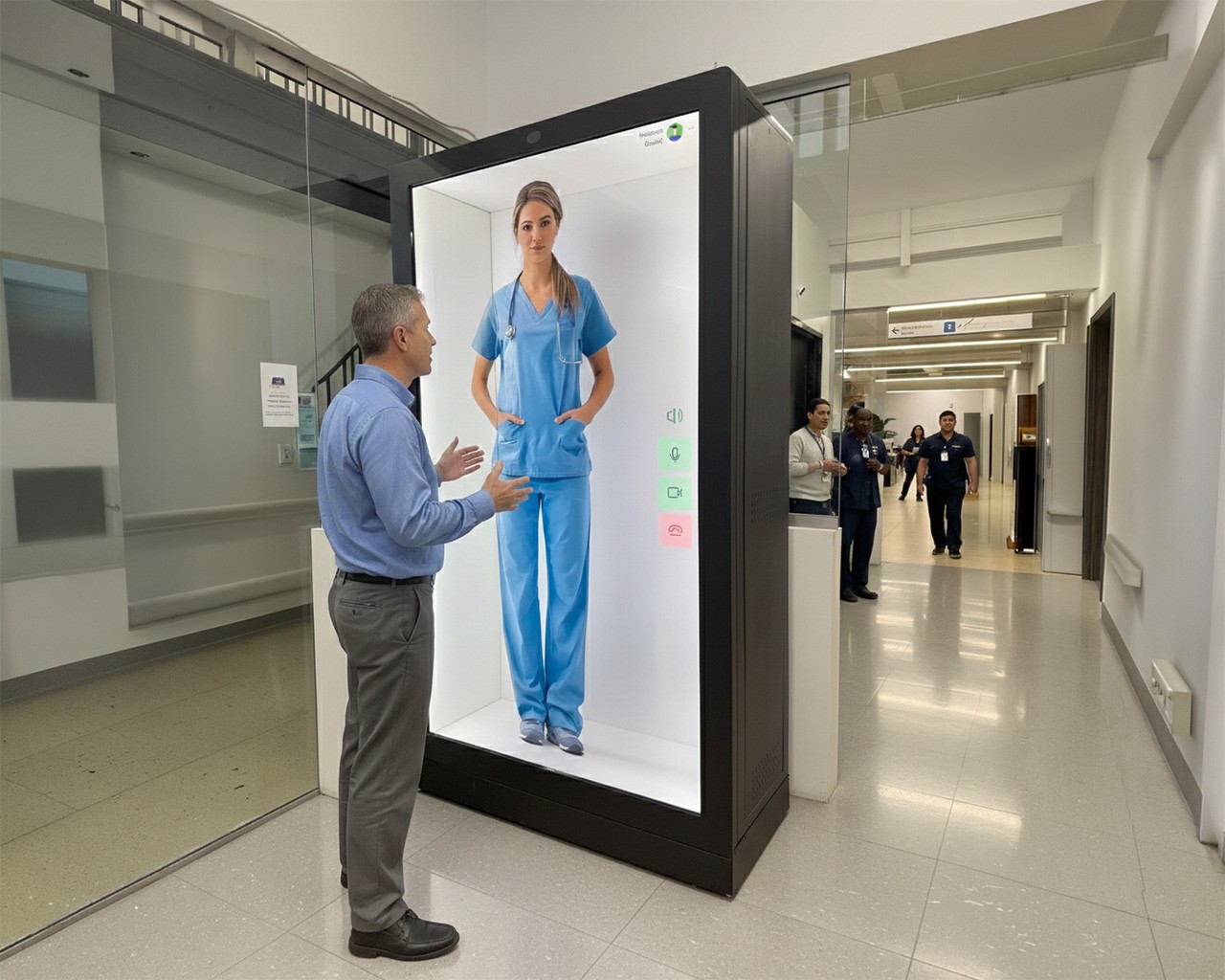
Healthcare Digital Concierge: Fixing Intake Bottlenecks and Simulation Training Gaps
Healthcare is being squeezed from both ends: patient demand keeps rising, while front desk, intake, and nursing teams are understaffed. The result is visible everywhere — long lines, frustrated patients, overwhelmed staff, and constant interruptions that pull clinicians away from care.

The End of Campus Clinical Visits: How AI Clinical Simulation Scales Remote Healthcare Programs
Healthcare education is rapidly moving online — yet one major barrier remains stubbornly physical: clinical simulations still require students to travel to campus.
Today, AI-powered clinical simulation is changing that model.
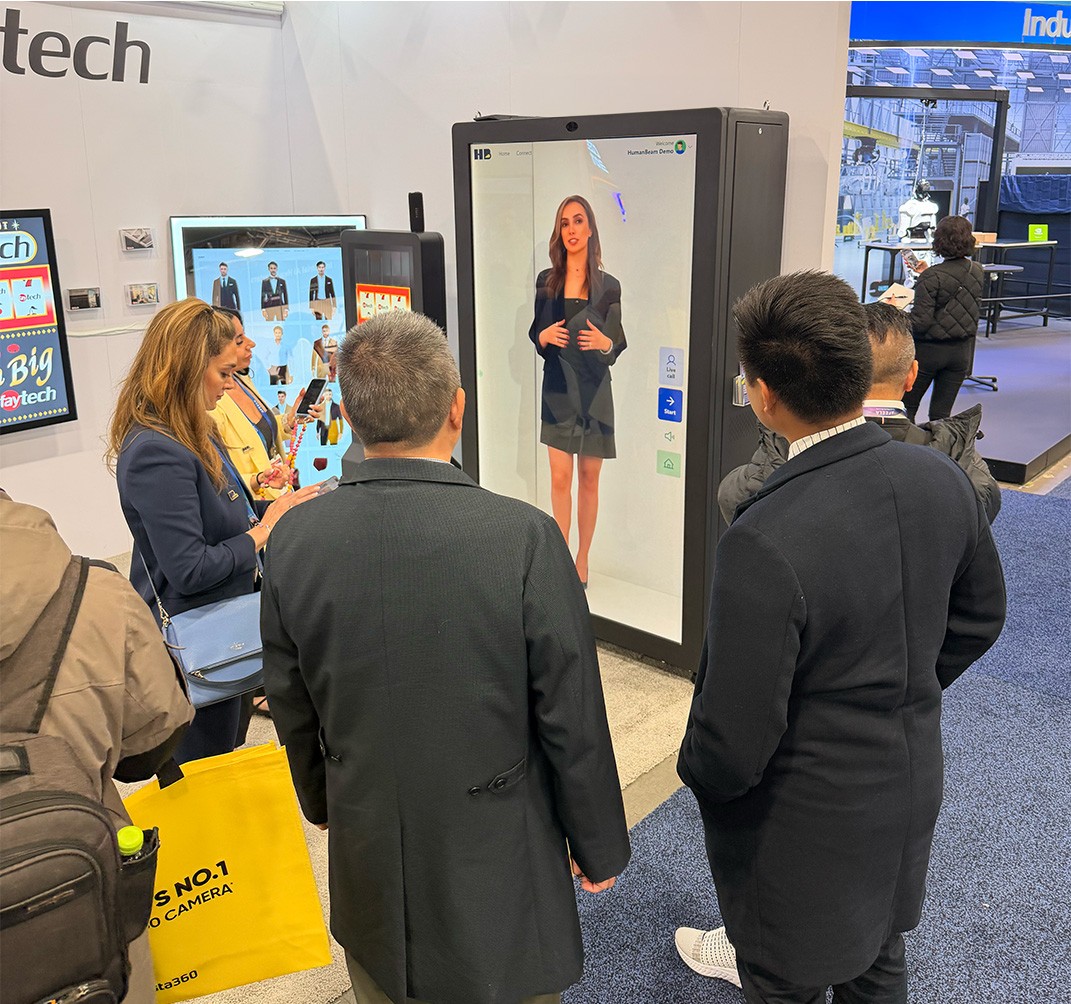
CES 2026: How HumanBeam Turned AI Holograms Into a Traffic Magnet
At CES 2026, HumanBeam approached engagement differently.
Visitors encountered life-size AI holograms dancing, greeting guests, and conversing naturally in 28 languages. Attendees stopped not just to watch but to interact.
The booth remained continuously active because visitors were curious, engaged, and shared their experience with others.
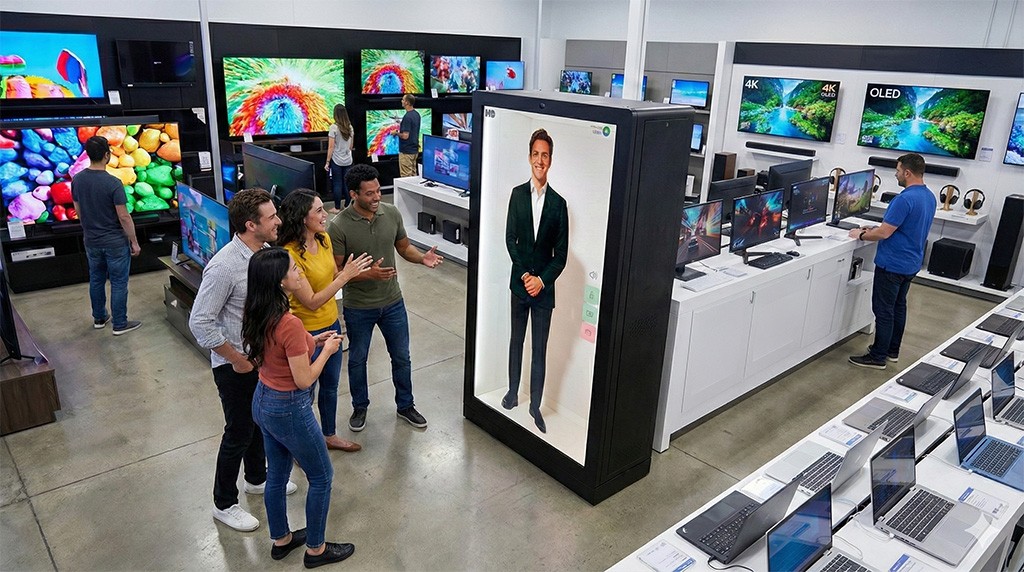
Conversational AI Holograms Solve the Engagement Problem
HumanBeam’s conversational AI holograms solve this problem by creating interactive digital humans that naturally attract attention.
People stop, interact, and ask questions because the assistant feels human rather than mechanical.

What Is an AI Voice Agent? Complete Business Guide for 2026
An AI voice agent is a conversational system that understands spoken language and responds naturally, allowing customers to interact through voice instead of waiting for human support.
HumanBeam combines natural voice AI with lifelike digital humans, creating interactions that feel conversational rather than mechanical. Customers can ask questions naturally while seeing and speaking to a digital assistant that understands context and intent.
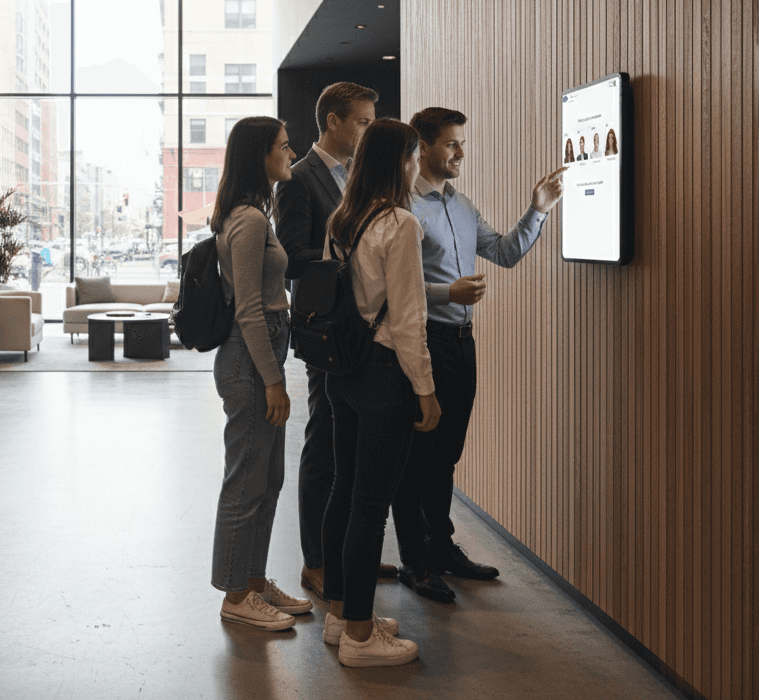
Hotels Face a Staffing Crisis — AI Concierge Is Becoming Essential
Hotels worldwide are facing a growing operational challenge.
Front desks are understaffed. Employee turnover is high. Guests arrive late at night expecting fast service, directions, and recommendations — but hotels struggle to maintain staff around the clock.
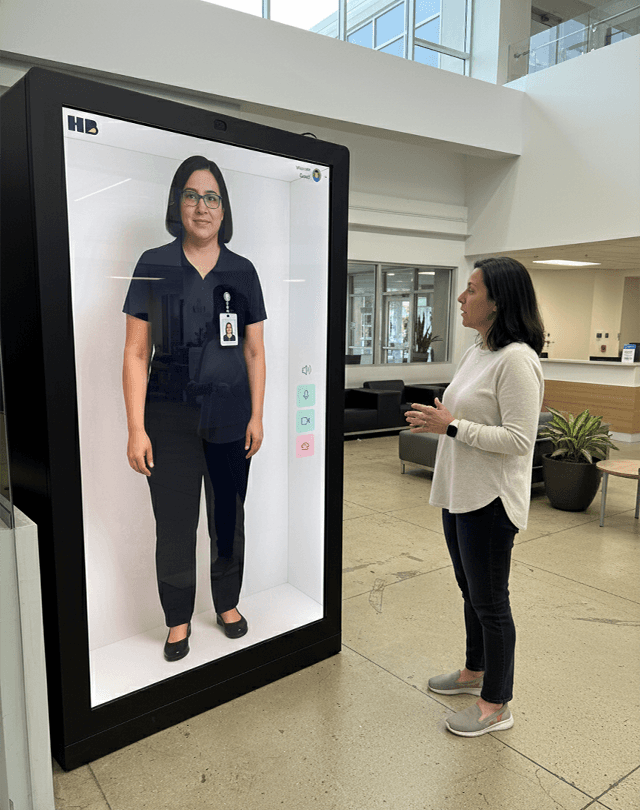
Healthcare Staffing Shortages Demand Digital Concierge Solutions
Healthcare training faces another challenge: simulation sessions require hiring actors to play patients. These sessions are costly, inconsistent, and hard to schedule.
HumanBeam introduces AI patient actors for simulation training, allowing medical students and staff to practice scenarios anytime with consistent, repeatable patient interactions.

Beyond the Flat Case Study: Meet Michael Latre, the Future of Healthcare Simulation
To replace costly, non-scalable human actors and static case studies, universities are integrating HumanBeam's visual conversational AI into healthcare education.
The core innovation is Michael Latre, an interactive AI persona. Michael is a middle-aged, homeless Canadian man presenting to the ED with severe COPD. Students speak directly to him, hearing realistic symptoms like "breathing through a straw."